


Results that matter:
-
No more melted combs
-
No more lost comb attachments
-
New sleek design
-
Reduced wrist strain
Most tools aren’t built for your hair type.
Meet The Kinktamer — Built Specifically for Natural Hair
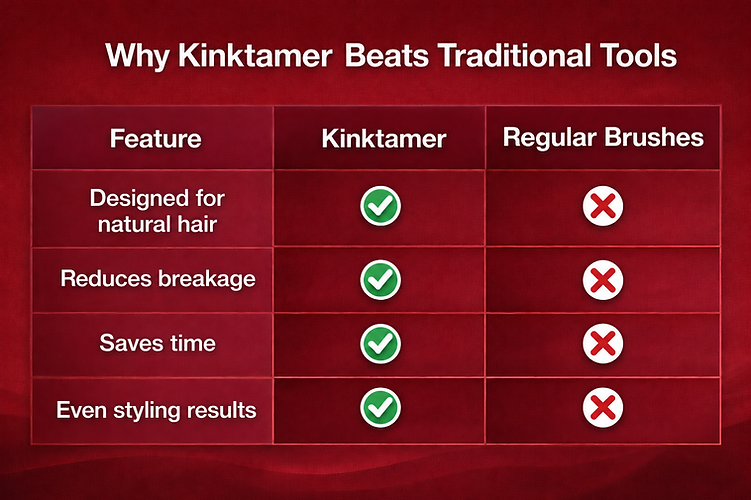
The Kinktamer is engineered to glide through thick textures, reduce breakage, and cut styling time dramatically.
See How It Works in Real Time
Step 1: Section & Glide
Step 2: Detangle Without Pulling
Step 3: Smooth & Style Easily
No heat damage. No unnecessary tension. Just results.

Why Thousands Are Switching to
The Kinktamer

Reduces Breakage
Designed to minimize hair stress and damage

Frizz Control
Smoother, longer-lasting styles

Saves Time
Cut styling time by up to 50%

Easy to Use
Beginner-friendly design

Works on All Natural Hair Types
From 3A to 4C textures

Salon-Level Results at Home
Professional performance without the cost
- Wholesale Orders -
Wholesale Orders for Beauty Supply Owners
Order The Kinktamer™ for your store. Simple pricing. Fast approval.


Pricing:
-
$556 per bundle (4 blow dryers included)
-
Suggested Retail: $189 per unit
-
Minimum Order: 1 bundle
Requirements:
To place a wholesale order, you must submit:
-
Valid Business License
-
Valid Driver’s License
(Upload will be completed through the application form.)
Real Results from Real Users
Beverly L.
“This design saves time and is very efficient! It handles even the curliest of hair"
Erika K.
"The Kinktamer is like no other blow dryer I have ever seen before. It is a total game-changer. My hair is very coarse, so I have the constant struggle of having to re-attach the blow dryer comb. I love that everything is built right in."
Celeste C.
“The blow dryer is an awesome invention. Women who are natural like myself benefit from having the comb attached. No more stopping to re-attach the comb.”

Never Lose Your Comb Again!
Engineered for Performance
● Flexible Bristle Technology
→ Reduces tension and breakage
● Ergonomic Grip Design
→ Full control while styling
● Durable Build
→ Long-lasting even with daily use
How to Use The Kinktamer

Start with damp or conditioned hair
1

Glide from ends to roots
3
.jpeg)
Section hair evenly
2

Style as desired
4
✱ Use with leave-in conditioner for best results
Revolutionize Your Hair Care Routine with the Kinktamer Blowdryer
NOW AVAILABLE!

We’ve spent billions in the beauty industry, but almost none of it in ownership of how products are made.
If you’re ready to change that even in a small way, join the Kinktamer Founder’s Circle today, and gain valuable access to the manufacturing/outsourcing webinar. Order your Kinktamer unit today and become a member of the Founder’s Circle.
Never lose your comb again!
Be the First to Experience the Future of Hair Straightening!
